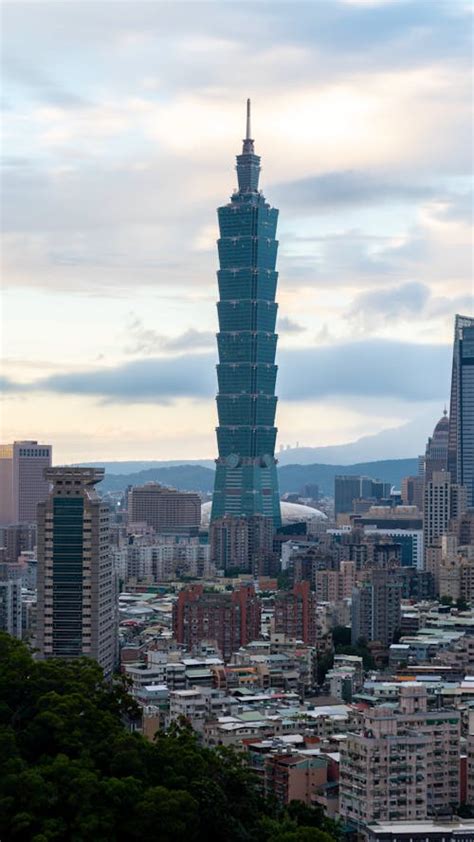
Taiwan Tensions: Latest Updates on Geopolitical Landscape\n\nHey guys, let’s dive deep into something that’s making headlines and has
massive
global implications:
Taiwan’s geopolitical landscape
. When we talk about “Taiwan latest war news today,” it’s less about an actual war breaking out right now and more about the intensifying tensions, diplomatic maneuvering, and military posturing that constantly shape this highly sensitive region. This isn’t just about a tiny island; it’s about global economics, international power dynamics, and the future of democracy. So, grab a coffee, and let’s break down what’s really happening on this complex chessboard.\n\n## Understanding Taiwan’s Unique Status\n\nFirst off, to really get a handle on
Taiwan’s unique status
, we need to unpack its fascinating and often contentious history. Taiwan, officially known as the
Republic of China (ROC)
, has a story that’s quite unlike any other. After the Chinese Civil War in 1949, the defeated Kuomintang (KMT) forces, led by Chiang Kai-shek, retreated to Taiwan, establishing their government there, while the Communist Party of China (CPC) established the People’s Republic of China (PRC) on the mainland. For decades, both sides claimed to be the legitimate government of all China. However, over time, Taiwan evolved into a vibrant, multi-party democracy, standing in stark contrast to the authoritarian system on the mainland. This democratic transformation is a huge part of its identity today, something its citizens fiercely protect. \n\nToday, Taiwan operates as a
de facto independent state
, with its own democratically elected government, military, currency, and foreign policy. Yet, the PRC continues to view Taiwan as a breakaway province that must eventually be reunified with the mainland, by force if necessary. This
“One China” policy
is the bedrock of Beijing’s stance, and it’s where much of the tension stems from. Many countries, including the United States, acknowledge—but do not endorse—this “One China” policy, which means they recognize the PRC’s claim but maintain unofficial relations with Taiwan. This diplomatic tightrope walk creates a
fragile balance
in the region. The international community grapples with how to engage with Taiwan’s robust democracy and economy without provoking Beijing. This ongoing dispute over
cross-strait relations
is incredibly sensitive, with every diplomatic gesture, military exercise, and political statement scrutinized by all parties involved. It’s a testament to Taiwan’s resilience that despite this precarious situation, it has thrived as a global economic and technological powerhouse, a beacon of democratic values in a challenging neighborhood. Understanding this historical and political backdrop is absolutely crucial to grasping
today’s geopolitical situation
and why “Taiwan latest war news today” is such a consistent and critical search term.\n\n## The Geopolitical Chessboard: Players and Stakes\n\nNow, let’s talk about the
geopolitical chessboard
and the various
key players
involved in the unfolding drama around Taiwan. It’s not just a two-player game; this is a complex, multi-faceted contest with incredibly high stakes for everyone. At the center, of course, is China, whose unwavering stance on
reunification
with Taiwan is a core tenet of its national sovereignty and a major driving force behind its military modernization and assertive foreign policy. Beijing views Taiwan as an internal affair and a historical legacy that must be resolved, often emphasizing national rejuvenation as a key motivator. Then there’s the United States, which plays a critical and often ambiguous role. While adhering to its “One China” policy, the U.S. also maintains robust unofficial relations with Taiwan under the
Taiwan Relations Act
, providing defensive arms to the island. This strategy of
strategic ambiguity
allows the U.S. to deter both a Chinese invasion and a Taiwanese declaration of formal independence, aiming to maintain stability without clearly committing to military intervention. \n\nBeyond these two giants, other international actors are increasingly expressing concern and taking positions. Japan, for instance, shares significant security interests in the region due to its proximity and the vital shipping lanes around Taiwan. The European Union, while geographically distant, recognizes the importance of maintaining peace and stability in the Indo-Pacific and is becoming more vocal on issues of democracy and human rights. Even groups like the Quad (Australia, India, Japan, and the U.S.) indirectly contribute to the regional security dialogue, often focusing on a “free and open Indo-Pacific” that implicitly includes concerns about Taiwan. The
economic stakes
are colossal, guys. Taiwan is an indispensable link in global supply chains, particularly for
advanced semiconductors
—those tiny chips that power everything from your smartphone to fighter jets. Any disruption could send shockwaves through the world economy. Furthermore, Taiwan’s
strategic location
along the “First Island Chain” makes it a critical point for controlling maritime access and projecting power in the Pacific, significantly impacting regional security. The ideological battle over
democratic values
versus authoritarian governance also adds another layer of complexity, making the
high stakes
for global stability incredibly clear. Each player’s move on this intricate board directly influences the delicate balance, and understanding their motivations is key to interpreting “Taiwan latest war news today” accurately.\n\n## Recent Developments and Military Activities\n\nAlright, let’s get into the nitty-gritty of
recent developments and military activities
that have really ratcheted up the tension around Taiwan. If you’ve been following any “Taiwan latest war news today” headlines, you’ve probably noticed a significant increase in PRC military exercises. We’re talking about more frequent and larger-scale drills around Taiwan, often simulating encirclement or invasion scenarios. These aren’t just minor maneuvers; they involve air force jets, naval vessels, and even missile tests, all designed to send a strong message to Taipei and Washington. We’ve seen a concerning rise in Chinese military aircraft, including fighter jets and bombers, entering Taiwan’s Air Defense Identification Zone (ADIZ) on an almost daily basis. These incursions are not just about showing force; they’re also about testing Taiwan’s defenses, gathering intelligence, and normalizing a more assertive presence near the island. Coupled with this, there’s been an expanded
naval presence
from China’s growing fleet, conducting exercises that further complicate regional security for Taiwan. \n\nOn the other side, the United States has continued its own demonstrations of presence and capability. You often hear about
US naval patrols
in the Taiwan Strait, which are explicitly designed to assert freedom of navigation and reassure allies. These patrols are often accompanied by
joint exercises
with other allied nations, like Japan, South Korea, and even Australia, reinforcing regional security alliances. Taiwan itself isn’t sitting idly by. It’s actively engaged in significant
defense upgrades
, focusing on building a more asymmetric warfare capability – essentially, making itself a very tough nut to crack for any potential aggressor. This includes investing in indigenous submarine programs, acquiring advanced missile systems from the U.S., and improving its cyber defenses. These efforts are aimed at making the cost of any invasion prohibitively high for China, acting as a crucial deterrent. Despite these efforts, the constant military posturing significantly raises
escalation risks
, making the possibility of miscalculation a serious concern for analysts worldwide. The sheer volume of military assets operating in close proximity increases the chance of an accidental encounter that could quickly spiral out of control. Furthermore, both sides are engaged in intense
media coverage
and information warfare, with
disinformation campaigns
often muddying the waters, making it challenging for the public to discern the truth. Understanding these continuous military activities is essential for anyone trying to make sense of “Taiwan latest war news today” and the delicate balance of power in the Indo-Pacific.\n\n## Economic Implications and Global Impact\n\nLet’s shift gears and talk about the colossal
economic implications and global impact
of any escalating tensions around Taiwan. Guys, this isn’t just about geopolitics; it’s about your everyday life, whether you realize it or not. Taiwan holds an absolutely dominant position in the
global economy
, especially when it comes to
semiconductors
. The Taiwan Semiconductor Manufacturing Company (TSMC), for example, is the world’s largest contract chipmaker, producing over 90% of the most advanced chips used in everything from your iPhone and gaming console to AI data centers, electric vehicles, and sophisticated military hardware. Seriously, if TSMC sneezes, the global tech industry catches a cold. The prospect of any conflict or even a blockade in the Taiwan Strait immediately raises fears of unprecedented
supply chain disruptions
. Imagine a world where there are no new iPhones, cars production grinds to a halt, and critical medical equipment becomes scarce because chips can’t be manufactured or delivered. \n\nSuch a scenario would send shockwaves through the
tech industry
, manufacturing sectors, and ultimately, consumer markets worldwide. Prices for everything from electronics to appliances would skyrocket, and global GDP could take a massive hit. We’re talking about an economic downturn far more severe than anything we’ve seen in recent memory. Beyond semiconductors, Taiwan is also a significant player in other industries, and its strategic location is vital for global
trade relations
. The Taiwan Strait is one of the busiest shipping lanes in the world, a crucial conduit for goods traveling between East Asia and the rest of the globe. Any disruption here would impact China, the U.S., the EU, and virtually every economy reliant on international trade. The potential
financial market reactions
to rising tensions are also a huge concern. Even rumors or increased rhetoric can cause stocks to tumble, commodity prices to fluctuate wildly, and investor confidence to plummet. Businesses worldwide are already trying to diversify their supply chains, but the sheer scale of Taiwan’s role makes a rapid shift almost impossible. This deep economic entanglement means that the world has a vested interest in maintaining peace and stability in the region. Understanding this intricate web of economic interdependence helps us appreciate why “Taiwan latest war news today” isn’t just a political headline, but a critical indicator for global economic health and stability.\n\n## Taiwan’s Resilience and Future Outlook\n\nAmidst all the geopolitical drama, it’s vital to recognize
Taiwan’s resilience
and consider its
future outlook
. Despite constant pressure and existential threats, Taiwan has consistently demonstrated remarkable strength, both democratically and culturally. Its vibrant
democratic strength
is a beacon in the region, with free and fair elections, a robust civil society, and a fiercely independent media. This strong democratic foundation is deeply intertwined with Taiwan’s national identity. Public opinion surveys consistently show that the vast majority of Taiwanese citizens, especially younger generations, identify primarily as Taiwanese, not Chinese, and value their democratic way of life above all else. This strong sense of identity and self-determination is a powerful force. Taiwan isn’t just hoping for peace; it’s actively preparing for various contingencies. Its strategies for
deterrence
involve a concept known as “asymmetric warfare,” which focuses on developing capabilities that can inflict significant damage on an invading force, making the cost of an invasion too high to bear. This includes a focus on mobile, precise missile systems, drone technology, and robust cyber defenses, designed to counter a larger, more conventional military. \n\nBeyond military readiness, Taiwan also relies heavily on
international support
and proactive
diplomatic efforts
to bolster its position. While many countries don’t formally recognize Taiwan, they maintain robust unofficial relations and increasingly voice concerns about cross-strait peace and stability. Taiwan’s leadership actively engages with like-minded democracies, emphasizing shared values and economic partnerships. The
path forward
for Taiwan is complex, centered on a delicate balance of maintaining peace, de-escalation of tensions, and advocating for meaningful dialogue with Beijing on an equal footing. There’s a strong desire to avoid conflict while steadfastly upholding its sovereignty and democratic freedoms. The
role of younger generations
in shaping Taiwan’s future cannot be overstated; they are increasingly vocal about their unique identity and their determination to preserve Taiwan’s hard-won democracy. They are a powerful force driving the island’s resolve and innovation. Despite the ominous “Taiwan latest war news today” headlines, Taiwan’s unwavering spirit and strategic foresight offer a hopeful, albeit cautious, future outlook, demonstrating its incredible ability to adapt and thrive under immense pressure.\n\n## What This Means for You\n\nSo, after all this talk about
Taiwan’s geopolitical landscape
and the constant buzz around “Taiwan latest war news today,” you might be wondering:
what this means for you
, the average global citizen? Well, guys, the truth is, the situation in the Taiwan Strait has far-reaching implications that touch all our lives, whether we realize it or not. Firstly, consider the immediate impact on your
daily life
. As we discussed, Taiwan is the nerve center for advanced semiconductor manufacturing. Any significant disruption there could lead to shortages and higher prices for everything from your smartphone and laptop to your car and home appliances. That’s a direct hit to your wallet and your access to technology. Beyond economics, the stability of this region is paramount for global peace. An escalating conflict here could destabilize the entire Indo-Pacific, potentially drawing in major world powers and leading to a broader international crisis. This isn’t just about one island; it’s about the entire global order and the future of international relations. \n\nIt’s crucial for us to encourage
informed awareness
and critical thinking about the news we consume. With so much information—and sometimes disinformation—circulating, taking the time to understand the nuances of this complex situation is more important than ever. Don’t just skim the headlines; dig deeper. The importance of
peace and dialogue
cannot be overstated. While military postures grab attention, diplomatic solutions and de-escalation are what truly protect lives and livelihoods. As global citizens, supporting efforts towards peaceful resolutions and upholding democratic values is essential. The future of Taiwan, and indeed much of the world, hinges on how these tensions are managed. Staying informed, advocating for peace, and understanding the interconnectedness of our world are your best tools in navigating this complex global environment. It’s a reminder that what happens thousands of miles away can indeed have a significant impact right here at home.
