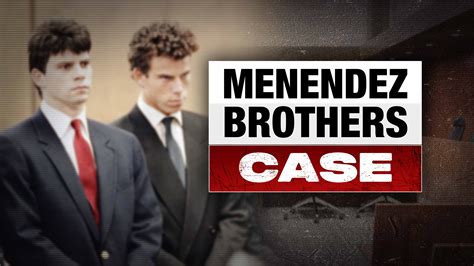
Menendez Brothers: Unpacking the Infamous Case\n\nThe
Menendez Brothers case
– man, talk about a true crime saga that just refuses to fade away, right? It’s one of those stories that grabs you by the collar and doesn’t let go, even decades later. For anyone
fascinated by true crime
or simply curious about the darker corners of human nature and justice, the names Lyle and Erik Menendez instantly ring a bell. This isn’t just about a sensational murder; it’s a deep dive into privilege, alleged abuse, media frenzy, and a legal battle that left the entire nation divided. We’re going to unpack this whole wild ride, exploring why it continues to be such a
hot topic
and what lessons we can still learn from it. So, grab your favorite snack, because we’re about to delve into one of the most
notorious cases
of our time.\n\n## The Shocking Beginning: Who Were the Menendez Brothers?\n\nAlright, let’s set the scene, guys. The year was 1989, and the world was about to be rocked by a crime that seemed utterly inexplicable on the surface. We’re talking about
Lyle and Erik Menendez
, two young men who, by all outward appearances, lived a life of ultimate privilege.
Born into immense wealth and influence
, they were the sons of Jose Menendez, a high-powered entertainment executive at Carolco Pictures, and Kitty Menendez, a former schoolteacher and socialite. Their family resided in a sprawling, opulent mansion in Beverly Hills, California – the kind of place most of us only dream of. They had access to the best schools, fancy cars, and whatever else a teenager could possibly desire. From the outside, it looked like the quintessential American dream, albeit an incredibly lavish one.\n\nThen, on the evening of August 20, 1989, that seemingly perfect world shattered into a million pieces. Jose and Kitty Menendez were
brutally murdered
in their living room. Shot multiple times with shotguns, their deaths were incredibly violent and perplexing. The initial scene suggested a mob hit or a professional assassination, designed to be swift and merciless. Can you even imagine the shock? The police investigation began, and naturally, all eyes eventually turned to the two surviving members of the immediate family:
Lyle, then 21, and Erik, then 18
. Their initial behavior was, to put it mildly,
a red flag
for many. While one might expect profound grief, the brothers quickly embarked on an extravagant spending spree. Luxury watches, Porsches, expensive clothes, lavish vacations, and even a tennis coach – they seemed to be living it up on their deceased parents’ dime, raising immediate suspicion among investigators and the public alike. It was as if they were celebrating, not mourning, which just didn’t sit right with anyone trying to make sense of the tragedy.\n\nThe story really twisted, though, when the brothers finally confessed, not to the police directly, but to a psychologist, Dr. L. Jerome Oziel. Erik, burdened by guilt, confided in Oziel, and Lyle later joined in the confessions. It was these
therapy sessions
, secretly recorded and later made public, that would become a crucial and
highly controversial
piece of evidence in their eventual trials. When the details of their confession finally came out, the initial narrative of the wealthy sons simply offing their parents for inheritance money was complicated by a dark, disturbing counterclaim. The brothers alleged that they had been
victims of years of horrific physical, emotional, and sexual abuse
at the hands of their father, Jose, with their mother, Kitty, being aware of it and complicit in the abuse, or at least failing to protect them. This transformed the case from a clear-cut tale of patricide and matricide for greed into a complex, morally ambiguous debate about self-defense and the long-term psychological effects of
childhood trauma
. The prosecution, of course, painted a picture of two spoiled, entitled young men who killed their parents out of sheer avarice and a desire to escape their father’s strict control. The defense, however, argued that the murders were a desperate act, a pre-emptive strike by two terrified young men who believed their lives were in danger after their father threatened to kill them if they ever exposed his abuse. It was a
narrative battle
that captivated the nation and truly set the stage for one of the most talked-about trials in American history. This wasn’t just a simple murder; it was a deeply unsettling glimpse into the hidden pains within a seemingly perfect family, forcing us all to confront difficult questions about truth, perception, and the nature of justice.\n\n## The Trial of the Century: Greed vs. Abuse\n\nOkay, so with the shocking initial details out in the open, the stage was set for what many would dub the “Trial of the Century,” and boy, did it live up to the hype in terms of media frenzy and public division! The
Menendez Brothers’ trial
was actually two separate trials, both airing live on Court TV, which was a huge deal back then, letting millions of viewers become armchair detectives and jurors. The first trial began in 1993, and it was a rollercoaster of emotions and conflicting narratives. The prosecution, led by Deputy District Attorney Pam Bozanich and Lester Kuriyama, firmly stuck to their guns, presenting Lyle and Erik as
cold-blooded killers
driven purely by
greed and a desire for their inheritance
. They meticulously laid out the brothers’ lavish spending spree in the months following the murders – the Porsches, the Rolex watches, the fancy clothes, the professional tennis coaches – all purchased with their parents’ money. The prosecution argued that these purchases weren’t acts of grief but rather celebratory splurges, clear evidence that the brothers were relishing their newfound freedom and wealth. They painted a picture of entitlement and a desire to escape their father’s demanding and controlling nature. To them, it was simple: these
spoiled rich kids
wanted their parents’ money and freedom, and they were willing to kill for it.\n\nHowever, the defense, spearheaded by the charismatic and often controversial attorney Leslie Abramson (who represented Erik) and Jill Lansing (for Lyle), presented a completely different, deeply disturbing narrative. They shocked the nation by asserting that the
murders were not premeditated acts of avarice
but rather a desperate, final act of self-preservation born out of
years of horrific, relentless physical, emotional, and sexual abuse
perpetrated by their father, Jose, and enabled by their mother, Kitty. Imagine that, guys – going from “greedy killers” to “abuse victims” in the blink of an eye. The defense argued that Jose Menendez was a cruel, domineering tyrant who subjected his sons to unimaginable torment, including
repeated sexual molestation
of both boys, particularly Erik. Kitty, they claimed, was a severely depressed alcoholic who was either complicit in the abuse or too incapacitated to protect her children. The brothers testified in vivid, gut-wrenching detail about the alleged abuse, painting a picture of a household filled with fear, control, and unspeakable acts. They described living in constant terror, culminating in a belief that their father was about to kill them if they ever dared to expose his dark secrets. The defense maintained that the killings were a pre-emptive strike, a moment of
intense panic and fear
that led them to believe their lives were in immediate danger.\n\nOne of the most
controversial and pivotal moments
of the first trial revolved around the testimony of Dr. L. Jerome Oziel, the psychologist to whom Erik initially confessed. The defense fought fiercely to have the therapy tapes introduced, arguing they were crucial to understanding the brothers’ state of mind. The prosecution, conversely, saw them as hearsay and a manipulation. The judge eventually allowed portions of the tapes, revealing the raw confessions and the brothers’ claims of abuse, which further fueled the public debate. The emotional testimony, combined with the often-theatrical courtroom proceedings, created a palpable tension both inside and outside the courtroom. Ultimately, the first trial ended with
hung juries
– one jury couldn’t agree on a verdict for Lyle, and another couldn’t agree for Erik. This outcome left everyone stunned, highlighting just how deeply divided the public and even the jurors themselves were on the
questions of guilt, motive, and the impact of alleged abuse
. It was clear that the simple “greed” narrative was insufficient for many, and the “abuse” narrative, while shocking, was also not universally accepted as a complete justification. The legal system, and indeed society, grappled with the profound complexity of the case, preparing for a second, even more contentious round.\n\n## Appeals, Public Opinion, and the Long Road Ahead\n\nAfter the dramatic conclusion of the first trial with its hung juries, the
Menendez Brothers
were thrust into a second, equally intense legal battle. This time around, the rules of the game were significantly different, which would ultimately seal their fate. The second trial, which commenced in 1995, saw a new judge, Stanley Weisberg, at the helm. And guys, this is where things really tightened up for Lyle and Erik. Judge Weisberg implemented
stricter rules regarding the admissibility of evidence
, particularly concerning the abuse claims. While some testimony about the alleged abuse was allowed, it was heavily curtailed compared to the first trial. The defense was largely prevented from presenting the full, harrowing narrative of years of systematic torment, which they argued was essential to explaining the brothers’ state of mind and why they committed the murders. This restriction was a
major blow to their defense strategy
, effectively shifting the focus much more towards the prosecution’s original narrative of greed and premeditation. Without the full weight of the abuse claims to counter the prosecution’s case, the brothers faced an uphill battle.\n\nThe prosecution, learning from the first trial, refined their approach. They emphasized the
premeditation aspect
– the purchasing of shotguns, the planning, and the immediate post-murder spending spree. They argued that even if abuse occurred, it didn’t justify the brutal, execution-style murders of both parents. They successfully portrayed Lyle and Erik not as terrified victims, but as manipulative, calculating individuals driven by a desire for their family’s vast fortune and freedom from their father’s authority. The public watched intently, many still divided, but the restricted evidence presented in the second trial made it harder for the defense to sway opinions. On July 2, 1996, the verdicts came down:
Lyle and Erik Menendez were found guilty of two counts of first-degree murder
and conspiracy to commit murder. The sentence?
Life imprisonment without the possibility of parole
. It was a definitive end to the courtroom drama, or so it seemed at the time, but certainly not an end to the public’s fascination or the ongoing debate about their guilt and the context of their crimes.\n\nTheir lives in prison have been a stark contrast to their opulent upbringing. Initially, both brothers were sent to different prisons for security reasons and to prevent any further potential collaboration or manipulation. Erik was sent to Pleasant Valley State Prison, and Lyle to Mule Creek State Prison. Imagine going from a Beverly Hills mansion to a maximum-security cell –
a truly jarring shift
. Despite their separation, they communicated through letters and, famously, through a
prison pen pal program
. Over the years,
public opinion on the Menendez case
has continued to evolve, often fueled by new documentaries, podcasts, and articles that revisit the complexities. Some people firmly believe they were justified in their actions due to the alleged abuse, while others remain convinced they were simply calculating murderers. The #MenendezBrothers hashtag continues to spark passionate debates online. Both brothers have also found companionship behind bars; Erik married Tammi Saccoman in 1999, and Lyle married Anna Eriksson in 2003 (though that marriage later ended, and he married Rebecca Sneed in 2010). These
relationships in prison
have added another layer to their story, showing their attempts to forge some semblance of a normal life, however restricted. After years of being held in separate facilities, a significant development occurred in 2018 when Lyle and Erik were finally reunited at the Richard J. Donovan Correctional Facility in San Diego. It was a moment that generated renewed interest, showing that even after decades, the bond between the brothers, however tragic its origins, remained. This
reunion in prison
allowed them to see each other, talk, and even play chess, a small comfort in their otherwise bleak existence. They have continued to pursue appeals, consistently arguing that their original trials were unfair due to the exclusion of crucial abuse evidence, but so far, their efforts have been unsuccessful. The long road ahead for them remains behind bars, a testament to the enduring consequences of that fateful night in 1989.\n\n## Decades Later: Why Does the Menendez Case Still Captivate Us?\n\nSo, here we are, decades down the line, and the
Menendez Brothers case
still manages to grab headlines, spark heated discussions, and get people furiously typing away in online forums. Seriously, why does this story, from way back in 1989, continue to hold such a powerful grip on our collective consciousness? It’s not just a passing true crime fad; it’s an
enduring fascination
that speaks to deeper societal questions. One of the main reasons, guys, is the sheer
complexity of victimhood and culpability
at its core. Was it cold-blooded murder driven by greed, or was it a desperate act of self-preservation by deeply traumatized sons? This isn’t a simple black-and-white narrative, and humans are naturally drawn to ambiguity, especially when it involves such high stakes. The alleged
child abuse
element is particularly potent, forcing us to confront uncomfortable truths about what can happen behind closed doors, even in the most seemingly perfect, affluent families. It challenges our preconceived notions of who victims are and how they might react. If the abuse claims were entirely true, does that mitigate their actions? If they were fabricated, what does that say about their manipulation? These are tough questions, and there’s no easy answer, which keeps the debate alive and thriving.\n\nMoreover, the
socio-economic backdrop
of the case adds another layer to its enduring appeal. The Menendez family was immensely wealthy, living a lavish lifestyle that was completely unattainable for most people. This element of
privilege versus profound dysfunction
is incredibly compelling. It makes us wonder if justice is truly blind, or if wealth and social standing played a role in how the case unfolded, how evidence was presented, and how public opinion was initially swayed. The case also brought to the forefront crucial discussions about the
justice system itself
, particularly regarding the admissibility of evidence related to
childhood trauma and abuse
. The fact that the first trial resulted in hung juries and the second trial restricted abuse testimony has led many to question the fairness of the process and whether the full context of the brothers’ lives was ever truly considered by the courts. These aren’t just academic debates; they resonate deeply with anyone concerned about how victims are treated in the legal system and whether the system adequately accounts for the psychological aftermath of abuse.\n\nThe
media’s sensationalism
played a huge role in cementing the Menendez case in our minds. It was one of the first trials to be broadcast live on Court TV, turning the courtroom into a national theater. This unprecedented access meant that millions of people watched every twist and turn, forming strong opinions based on what they saw and heard. The media painted compelling, often conflicting, portraits of the brothers, their parents, and the attorneys involved, creating a narrative that was as dramatic as any Hollywood script. This legacy of media coverage continues today, with a fresh wave of
documentaries, podcasts, and true crime series
revisiting the case, bringing it to new generations of armchair detectives. Each new re-examination often unearths new perspectives, old footage, or previously unhighlighted aspects, sparking fresh debates on platforms like Reddit, Twitter, and TikTok. Folks are constantly trying to piece together the puzzle, to understand the motivations, and to decide for themselves what truly happened. Many people, even now, feel that
lingering doubt
– did we get the full picture? Was justice truly served, or were there extenuating circumstances that were never fully appreciated? The questions about the abuse, the parents’ true characters, and the brothers’ long-term psychological damage continue to haunt discussions, making the Menendez case a benchmark for true crime storytelling and a constant reminder that sometimes, the most profound truths are hidden beneath layers of perception, wealth, and pain. It’s a tragedy that continues to provoke thought and discussion, ensuring its place in the annals of criminal history.\n\n## The Enduring Legacy: A True Crime Benchmark\n\nAs we wrap up our deep dive into the
Menendez Brothers saga
, it’s clear that this isn’t just another true crime story; it’s a
benchmark case
that has left an indelible mark on everything from legal precedents to public perception of justice. The lasting impact of the
Menendez case
is truly profound, and it continues to shape how we view family dynamics, the justice system, and the complexities of human behavior. One of its most significant legacies is how it ignited and sustained a national conversation about
child abuse
, particularly within affluent families where such issues might be meticulously hidden. Before the Menendez trials, the idea that severe abuse could exist behind the gilded gates of a Beverly Hills mansion was often unthinkable for many. The defense’s allegations, whether fully believed or not, forced society to confront the uncomfortable reality that abuse knows no socio-economic boundaries and that victims can come from any background. This case, alongside others, played a role in increasing awareness and fostering a more nuanced understanding of the
long-term psychological effects of trauma
and how it might influence a person’s actions. It brought the discussion of victim behavior and the ‘battered person syndrome’ into mainstream discourse in a way that few cases had done before, challenging simplistic notions of guilt and innocence.\n\nBeyond the specific allegations, the
Menendez Brothers case
also became a pivotal moment in the history of media coverage of legal proceedings. As we discussed, its live broadcast on Court TV transformed true crime into a spectator sport, setting a precedent for how future high-profile trials would be covered. This exposure meant that legal arguments, witness testimonies, and the raw emotions of the courtroom became part of the daily conversation in homes across America. It blurred the lines between entertainment and justice, raising important questions about the impact of public opinion and media sensationalism on the fairness of a trial. The case highlighted the immense power of narrative – how the story is told, who tells it, and what evidence is allowed to be presented can profoundly shape perceptions of truth and culpability. For anyone studying media and the law, the
Menendez trial
remains a crucial point of reference, demonstrating both the potential for public education and the pitfalls of turning justice into a spectacle.\n\nUltimately, the
Menendez Brothers case
is a powerful, tragic narrative filled with themes of
tragedy, manipulation, and the often-elusive search for truth
. It’s a story where the lines between victim and perpetrator are perpetually blurred, and where definitive answers remain elusive for many. The debate over whether Lyle and Erik were cold-blooded murderers or desperate survivors continues to rage, reflecting society’s ongoing struggle to reconcile justice with mercy, and culpability with context. Their story reminds us that beneath the surface of seemingly perfect lives, profound suffering can exist, and that the motivations behind extreme acts are rarely simple. The case continues to inspire documentaries, discussions, and academic analyses, solidifying its place not just as a piece of criminal history, but as a lens through which we can examine deep societal issues. It truly serves as an enduring reminder that some stories are just too complex, too human, and too tragic to ever be fully resolved, ensuring the
Menendez Brothers’ legacy
will continue to spark discussion and introspection for generations to come. It’s a somber but essential chapter in the annals of American true crime, constantly pushing us to question, to understand, and to seek a more complete picture of justice.
