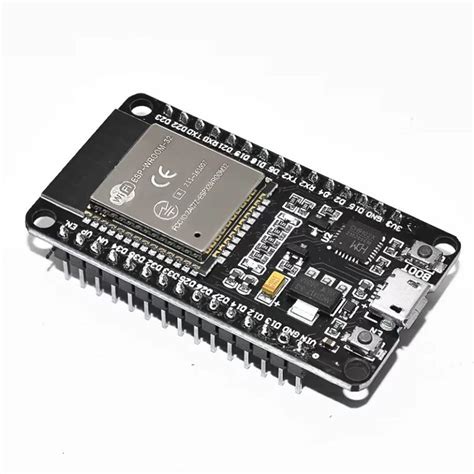
Finding ESP32-S2 Dev Boards & WROOM Marauder: Your Ultimate Guide!Once upon a time, finding specific tech gear felt like a treasure hunt, and honestly, for devices like the
ESP32-S2 dev board
or the infamous
WROOM Marauder
, it still kind of does! If you’re scratching your head wondering, “
Where in the world are these boards?
” trust me, you’re not alone, guys. This article is your ultimate guide, diving deep into why these awesome pieces of hardware can be elusive and, more importantly, how you can track them down or even build your own. We’re going to break down everything from understanding their unique appeal to navigating the tricky waters of supply chains and niche markets, all while keeping things super casual and friendly. Get ready to embark on a journey that will help you finally get your hands on these powerful tools for your IoT projects and network security explorations.## Understanding the Quest: Why Are ESP32-S2 and WROOM Marauder So Elusive?So, you’re on the hunt for an
ESP32-S2 dev board
or a
WROOM Marauder
, and it feels like they’ve vanished into thin air, right? This isn’t just bad luck, folks; there are some genuine reasons why these specific pieces of hardware can be tricky to pin down. Let’s peel back the layers and understand why your quest might be more challenging than just ordering a regular microcontroller.First off, the
ESP32-S2 dev board
itself is a fantastic piece of kit, a true powerhouse from Espressif designed for serious IoT applications. It boasts impressive features like integrated Wi-Fi, a robust processor, and even USB-OTG capabilities, making it a darling for projects requiring low-power consumption, secure boot, and a strong network connection. Developers absolutely
love
it for everything from smart home gadgets and industrial sensors to human-machine interface (HMI) devices. However, the global semiconductor shortage that plagued us for a few years hit specific chips harder than others, and while things are improving, certain versions or form factors of the ESP32-S2 can still be in limited supply or experience sporadic availability. Manufacturing priorities often shift, and sometimes a specific
dev board
variant might be less actively produced compared to its newer siblings like the ESP32-S3 or ESP32-C3, simply because demand has moved on, or Espressif is pushing its latest innovations. This means you might find generic ESP32-S2 modules, but the specific
dev board
with all the convenient headers and USB interfaces might require a bit more digging.Then we have the
WROOM Marauder
, which is a whole different beast. This isn’t a standard, off-the-shelf development board in the same way an ESP32-S2 is. Instead, the
Marauder
is a popular, open-source firmware designed to run on various
ESP32-WROOM
(or similar
ESP32-S2
or
ESP32-S3
) modules, effectively turning them into incredibly powerful network analysis and penetration testing tools. Think of it as giving your ESP32 superpowers for Wi-Fi sniffing, deauthentication attacks (for testing your
own
network’s resilience, of course!), and other security-related functions. Because the
Marauder
is firmware and not a dedicated hardware product manufactured by a single company, what you’re usually searching for is either: a) a generic
ESP32-WROOM
dev board that you can then flash with the
Marauder firmware
yourself, or b) a pre-flashed
Marauder
device sold by a small, independent vendor or community member. The latter option is often harder to find because these aren’t mass-produced items by large electronics distributors. They’re niche products, often assembled and sold by enthusiasts for enthusiasts. The supply is naturally limited, and demand within the cybersecurity and maker communities can spike unpredictably, leading to quick sell-outs. Furthermore, the nature of its capabilities means that larger retailers might shy away from selling
pre-flashed Marauder
devices to avoid potential legal or ethical complexities, even though the firmware itself has legitimate security research applications. So, when you’re looking for a “
WROOM Marauder
,” you’re typically looking for a specific combination of
ESP32 hardware
and
specialized firmware
, often sold through less conventional channels. Both the
ESP32-S2 dev board
and the
WROOM Marauder
exist in a fascinating intersection of mainstream electronics availability and niche community-driven distribution, making your search a true adventure!## Demystifying the ESP32-S2 Dev Board: Powering Your IoT InnovationsLet’s zoom in on the
ESP32-S2 dev board
, because understanding what makes it tick is key to appreciating its value and why it’s a coveted item for many makers and developers. When we talk about an
ESP32-S2 dev board
, we’re referring to a development board built around Espressif’s ESP32-S2 system-on-chip (SoC). This little chip is a real game-changer for many Internet of Things (IoT) applications, packing a serious punch in a small, low-power package. Its
primary feature
is its powerful single-core LX7 processor, which can run at up to 240 MHz, providing plenty of processing power for complex tasks. But what really makes the ESP32-S2 stand out from its predecessors and some competitors is its
robust Wi-Fi connectivity
. It supports 2.4 GHz 802.11b/g/n Wi-Fi, ensuring reliable and fast wireless communication for your projects. This is crucial for anything that needs to connect to a network, from smart sensors reporting data to cloud platforms to home automation devices interacting with your Wi-Fi router.Another standout feature of the
ESP32-S2 dev board
is its
native USB-OTG (On-The-Go) support
. Guys, this is a
huge deal
. It means the ESP32-S2 can act as both a USB host and a USB device, opening up a world of possibilities. You can connect USB peripherals directly to it, like a keyboard, mouse, or even a camera, turning your simple IoT device into something much more interactive and capable. This also simplifies programming and debugging, as you can often use a single USB cable for power, data, and communication. Beyond connectivity, the ESP32-S2 is designed with
security
at its core. It includes features like secure boot, flash encryption, and a digital signature peripheral, which are essential for protecting your IoT applications from unauthorized access and tampering. For anyone building commercial or privacy-sensitive devices, these security measures provide a crucial layer of defense.The
applications
for an
ESP32-S2 dev board
are incredibly diverse. You’ll find it powering everything from low-cost, low-power
smart home devices
(think smart lights, thermostats, or security cameras) to
wearables
that need to communicate wirelessly. It’s also fantastic for
industrial IoT
sensors that monitor environmental conditions or machinery, thanks to its reliability and robust Wi-Fi. Many hobbyists and professionals also use it for
human-machine interface (HMI)
projects, creating intuitive touchscreens or interactive displays. The
dev board
itself usually comes with convenient features like a USB-C port for power and data, GPIO pins broken out for easy access, an on-board antenna (or a U.FL connector for an external one), and often a voltage regulator, making it incredibly user-friendly for rapid prototyping.So, why is it such a
popular choice
? Developers appreciate its blend of power efficiency, integrated Wi-Fi, and unique features like USB-OTG, all within a cost-effective package. It strikes a fantastic balance between performance and accessibility, making it ideal for both beginners diving into IoT and seasoned pros tackling complex projects. When you’re looking to buy, your best bet is to check
official distributors
like Adafruit, SparkFun, Digikey, and Mouser. These are often the first to restock and offer genuine products. Don’t forget reputable online marketplaces like Amazon or even AliExpress, but always
exercise caution
and check seller reviews to avoid counterfeit boards. Keep an eye out for specific models like the “
ESP32-S2-DevKitC-1
” or the “
ESP32-S2-Kaluga-1 Kit
” as these are common development kits. Persistent searching and checking multiple sources are your friends here!## The WROOM Marauder: A Deep Dive into Network Security & FunAlright, let’s talk about the
WROOM Marauder
. This isn’t just another dev board; it’s a
statement piece
in the world of network security and ethical hacking, turning a humble ESP32 into a formidable tool. First and foremost, it’s crucial to understand that “
WROOM Marauder
” isn’t a single, commercially produced hardware item you’d typically find on a shelf at your local electronics store. Instead, it refers to a
highly specialized firmware
—the
Marauder firmware
—that runs on compatible ESP32 development boards, most commonly those using the
ESP32-WROOM
module. While it can also be adapted for
ESP32-S2
or
ESP32-S3
boards, the
WROOM
variants are its spiritual home due to their widespread availability and robust Wi-Fi capabilities.The
core purpose
of the
Marauder firmware
is to provide a comprehensive suite of tools for
network analysis, penetration testing, and general Wi-Fi mischief
(the ethical kind, of course!). Imagine having a tiny device that can scan for all Wi-Fi networks around you, identify hidden SSIDs, capture handshake packets (critical for understanding network security), perform deauthentication attacks (again, for
testing your own network’s resilience
or educational purposes, not for nefarious activities!), and even act as a
beacon spoofer
or
rogue AP
. These capabilities are incredibly valuable for network administrators, security researchers, and even curious hobbyists who want to understand how Wi-Fi networks truly work, identify vulnerabilities, and enhance their own network’s security posture. It’s like having a mini cybersecurity lab in your pocket.When you flash the
Marauder firmware
onto an
ESP32-WROOM
dev board (or another compatible module), you essentially transform it into a portable, battery-powered Wi-Fi auditing tool. It often comes with a user-friendly interface that can be accessed via a web browser on your phone or laptop connected to the device’s own Wi-Fi access point, or through a serial console. This makes it incredibly versatile and easy to use in the field. You don’t need a bulky laptop for basic operations; just the
Marauder
device itself.The
ethical considerations
surrounding the
WROOM Marauder
cannot be stressed enough, guys. While the tools it provides are powerful, they
must
be used responsibly and legally. Deauthentication attacks, for instance, can disrupt wireless networks, and using them on networks you don’t own or have explicit permission to test is illegal and unethical. The
Marauder
is a learning tool, a security research device, and a diagnostic instrument—not a hacking weapon for illicit activities. Always operate within the bounds of the law and with appropriate authorization.This brings us to
why the WROOM Marauder is harder to find
. Since it’s primarily firmware, if you’re looking for a
pre-flashed
Marauder
device, you’re venturing into a niche market driven by small-scale vendors and community members. These individuals or small outfits often assemble and flash generic
ESP32-WROOM
boards, sometimes adding custom enclosures or external antennas, and then sell them. They don’t have the mass production capabilities or widespread distribution channels of large electronics companies. The supply is inherently limited, and when a batch becomes available, it often sells out quickly due to high demand within the specialized communities interested in security research and ethical hacking. Furthermore, the ethical implications, as mentioned, mean that major retailers are unlikely to stock pre-built
Marauder
devices to avoid any association with misuse. So, if you’re struggling to find one, remember that you’re looking for a specialized, community-driven product, not a mainstream consumer electronic. Your best bet is often to
build it yourself
or scour community marketplaces.## Navigating the Search: Tips and Tricks to Locate Your Desired BoardsWhen you’re trying to track down an
ESP32-S2 dev board
or a
WROOM Marauder
, it can feel like you’re searching for a needle in a haystack, especially with current supply chain dynamics. But don’t despair, guys! There are some solid strategies you can employ to increase your chances of success. It’s all about knowing
where to look
and being a bit
persistent
.### Official Distributors and Reputable RetailersFor the
ESP32-S2 dev board
, your first port of call should always be the big-name,
official distributors
and
reputable electronics retailers
. Think giants like
Digikey
,
Mouser
,
Adafruit
, and
SparkFun
. These companies have direct relationships with manufacturers like Espressif, and they are typically the first to receive new stock. They also provide genuine products, excellent documentation, and reliable customer service. While their prices might be slightly higher than some marketplace sellers, you’re paying for authenticity and peace of mind. Other great options include
Pimoroni
or
Okdo
in Europe, and regional electronics stores that might carry a specific line of development boards. Always check their stock status regularly, as inventory can fluctuate rapidly. For budget-friendly options, or if you’re prepared to wait, platforms like
AliExpress
and
LCSC
can be useful, but you
must exercise caution
. Always check seller ratings, read reviews, and confirm the board’s specifications to avoid clones or less reliable versions. Look for sellers with a long history and overwhelmingly positive feedback when purchasing something like an
ESP32-S2-DevKitC-1
.### Community Marketplaces & ForumsWhen it comes to finding a
WROOM Marauder
(or the components to build one), or even an elusive
ESP32-S2 dev board
that’s out of stock elsewhere, the
maker and cybersecurity communities
are your best friends.Platforms like
Reddit
, specifically subreddits such as
r/esp32
,
r/badusb
,
r/iot
, and
r/netsec
, are bustling hubs where members often share stock alerts, recommend sellers, or even sell their own custom-built devices.
Discord servers
dedicated to ESP32 development, IoT, or hacking projects are also goldmines. Many content creators or small-scale vendors who build and flash
Marauder
devices announce their sales directly within these communities. Keep an eye on forums like
Hackaday.io
or specialized electronics and security forums, as these places foster direct connections between creators and potential buyers. It’s also a good idea to search for project pages on platforms like
GitHub
, as
Marauder
firmware authors or contributors might link to preferred hardware vendors or pre-built options there. Be prepared to act fast, as community-driven sales often have limited stock.### Tracking Inventory & Setting AlertsGiven the sporadic availability of certain boards,
tracking inventory
and
setting up alerts
can save you a lot of manual searching. Many online retailers offer an “email me when in stock” feature –
use it!
For more advanced tracking, consider browser extensions or third-party websites designed to monitor product stock on popular e-commerce sites. These tools can sometimes notify you faster than official store alerts. Websites like
Octopart
or
Parts.io
can also help you compare stock levels across multiple distributors for specific components or modules, although they might not always list complete dev boards.### Consider AlternativesIf the specific
ESP32-S2 dev board
or a pre-built
WROOM Marauder
remains stubbornly out of reach, it’s smart to consider
alternatives
. For general IoT projects requiring Wi-Fi, an
ESP32-C3 dev board
or an
ESP32-S3 dev board
might be perfectly suitable, and they often have better availability as they are newer chips. The ESP32-S3, for instance, offers dual-core power, Wi-Fi, Bluetooth 5 (LE), and a more robust feature set, often making it an excellent upgrade or substitute. For
WROOM Marauder
functionality, your strongest alternative isn’t another device, but rather the
DIY route
.### DIY Route: Building Your Own MarauderThis is where the real fun and learning begin! If you can’t find a pre-flashed
WROOM Marauder
, you can absolutely
build your own
. All you need is a compatible
ESP32 development board
(an
ESP32-WROOM-32
board is ideal and usually easy to find) and the
Marauder firmware
. This approach gives you full control and a deeper understanding of the device. You’ll need:1. An
ESP32-WROOM-32 dev board
(or similar
ESP32-S2/S3
board).2. A USB-C or Micro-USB cable (depending on your board).3. Optionally, a soldering iron if you want to add an external antenna for better range, though many boards come with an on-board antenna.4. A microSD card (and reader) for logging data with the Marauder firmware.The process involves downloading the
Marauder firmware
from its official GitHub repository, connecting your chosen ESP32 board to your computer, and using a flashing tool (like
esptool.py
or
ESP32 Download Tool
) to load the firmware onto the board. This is a very common procedure in the ESP32 community and there are plenty of tutorials online to guide you. Not only is this often more cost-effective, but it’s also incredibly rewarding to bring your own
Marauder
to life! By following these tips, guys, you’ll significantly boost your chances of getting your hands on these powerful and versatile ESP32 boards. Happy hunting!## Building Your Own WROOM Marauder: A Step-by-Step GuideAlright, guys, if finding a pre-built
WROOM Marauder
feels like trying to catch smoke, fear not! The absolute best and often most rewarding path is to
build your own
. This isn’t just about saving a few bucks; it’s about truly understanding the hardware and software that make this awesome network tool tick. Plus, it gives you bragging rights! So, let’s roll up our sleeves and get into the nitty-gritty of making your very own
Marauder
device.### What You’ll Need to Get StartedFirst, gather your ingredients. Don’t worry, it’s nothing too exotic:1.
An ESP32 Development Board
: This is the heart of your
Marauder
. While many ESP32 modules can work, an
ESP32-WROOM-32 development board
is highly recommended. These are widely available, cost-effective, and perfectly compatible with the
Marauder firmware
. Look for boards with a USB port (either Micro-USB or USB-C) for easy flashing and power. The
ESP32-DevKitC
is a popular choice, as are boards from makers like
Adafruit
or
SparkFun
that feature the WROOM module. If you can only find an
ESP32-S2
or
ESP32-S3
board, check the
Marauder GitHub
for specific instructions, as compatibility can vary slightly.2.
USB Cable
: A good quality data-sync USB cable that matches your board’s port (Micro-USB or USB-C). This is crucial for both powering the board and flashing the firmware.3.
MicroSD Card (Optional, but highly recommended)
: A small capacity (e.g., 2GB, 4GB, 8GB) microSD card is essential if you want to log network data, capture handshakes, or store configurations directly on the device. Make sure you have a way to format it (FAT32) and load files onto it from your computer.4.
Soldering Iron & Jumper Wires (Optional)
: You’ll only need these if you plan to add an external antenna for better range or connect other peripherals. Most dev boards have an onboard antenna, which is usually sufficient for casual use.5.
Computer with Internet Access
: For downloading the firmware, drivers, and flashing tools.### Software SetupBefore we flash, we need to set up our computer environment.1.
Install ESP-IDF (Espressif IoT Development Framework) or esptool.py
: The
Marauder firmware
is often built using the ESP-IDF. While you might not need the full IDF installation if you’re just flashing pre-compiled binaries, having
esptool.py
(which comes with IDF or can be installed via
pip install esptool
) is almost always necessary.
esptool.py
is the command-line tool for interacting with ESP chips, including flashing firmware. Many
Marauder
releases also provide a pre-compiled
bin
file and specific
ESP32 Download Tool
(a GUI-based flasher for Windows) that simplifies the process if you’re on Windows. For Mac/Linux,
esptool.py
is your go-to.2.
Download the Marauder Firmware
: Head over to the official
Marauder GitHub repository
(a quick search for “
ESP32 Marauder GitHub
” will get you there). Look for the “Releases” section, where you’ll find the latest stable pre-compiled firmware
.bin
files. Make sure to download the correct
.bin
file for your specific ESP32 board (e.g.,
ESP32-WROOM
,
ESP32-S2
,
ESP32-S3
). There might be multiple
.bin
files to flash, corresponding to different parts of the firmware (bootloader, partition table, application, etc.). *Read the flashing instructions on the GitHub page carefully!*3.
Install CP210x or CH340G Drivers
: Most ESP32 dev boards use a USB-to-serial converter chip (like the
CP210x
or
CH340G
) to communicate with your computer. If your computer doesn’t automatically recognize the board when you plug it in, you’ll need to install the appropriate drivers. A quick search for “
CP210x drivers
” or “
CH340G drivers
” will lead you to the manufacturer’s website.### Step-by-Step Flashing ProcessThis is where the magic happens!1.
Connect Your Board
: Plug your ESP32 dev board into your computer using the USB cable. Ensure it’s properly recognized. On Linux/macOS, you can check
ls /dev/tty.*
to see the serial port (e.g.,
/dev/tty.SLAB_USBtoUART
or
/dev/ttyUSB0
). On Windows, check
Device Manager
under
Ports (COM & LPT)
for the assigned
COM port
.2.
Prepare MicroSD Card (if using)
: If you’re planning to use a microSD card, format it as
FAT32
and make sure it’s inserted into the ESP32 board’s slot
before
flashing the firmware (or at least before first boot, depending on the
Marauder
version).3.
Download & Prepare Flashing Tool
: If using the
ESP32 Download Tool
(Windows GUI), extract it and open the
exe
. If using
esptool.py
(command line for all OS), navigate to the directory where you downloaded your
Marauder .bin
files.4.
Flash the Firmware
: *
Using ESP32 Download Tool (Windows)
: Load the various
.bin
files into the tool, making sure to specify the correct addresses as indicated in the
Marauder GitHub
flashing instructions. Select your
COM port
, set
Baudrate
(usually 115200 or 460800), and hit
START
. *
Using esptool.py (Linux/macOS/Windows command line)
: This is a robust method. You’ll typically use a command similar to this (replace
/dev/ttyUSB0
with your port and adjust
.bin
files and addresses according to
Marauder
instructions):
esptool.py --chip esp32 --port /dev/ttyUSB0 --baud 460800 write_flash 0x1000 bootloader.bin 0x8000 partition_table.bin 0x10000 marauder.bin
*You absolutely
must
consult the specific
Marauder GitHub
instructions for the exact
esptool.py
command and addresses, as they can change between firmware versions!*5.
Wait for Completion
: The flashing process will take a few moments. Do not disconnect the board until it’s finished.6.
Reboot and Access
: Once flashed, your board should reboot. You can usually access the
Marauder
interface by connecting your computer or phone to its Wi-Fi access point (e.g.,
Pwnagotchi_XXXX
or
Marauder_XXXX
) and navigating to
192.168.4.1
in a web browser. Alternatively, you can connect via serial monitor (e.g.,
PuTTY
,
minicom
, Arduino IDE’s serial monitor) at a baud rate of 115200.### Basic Usage and Ethical RemindersOnce your
WROOM Marauder
is up and running, you’ll find a range of options for Wi-Fi scanning, packet capture, deauthentication attacks, and more.
Always remember the ethical guidelines!
Use your
Marauder
for educational purposes, to test
your own
network’s security, or with explicit permission from network owners. Misusing such a powerful tool can have serious legal consequences. Building your own
Marauder
is a fantastic way to deepen your understanding of network security and the capabilities of ESP32 devices. Have fun, and be responsible, guys!## The Future of ESP32 Boards and Marauder ProjectsThe world of microcontrollers and network security is constantly evolving, and the journey to find your perfect
ESP32-S2 dev board
or
WROOM Marauder
is just one snapshot of this dynamic landscape. Let’s cast our gaze forward and think about what the future holds for these incredible tools and the community that embraces them.The
ESP32 ecosystem
from Espressif is anything but stagnant, guys. They are relentlessly innovating, pushing the boundaries of what’s possible with low-cost, high-performance Wi-Fi and Bluetooth-enabled chips. We’ve already seen the evolution from the original ESP32 to the ESP32-S2 (our focus today), and then quickly to the more powerful
ESP32-S3
, which boasts a dual-core processor, more GPIOs, native USB-OTG, and even AI acceleration capabilities. Beyond that, chips like the
ESP32-C3
(a RISC-V based, single-core chip offering a simpler, even more cost-effective entry point) and the
ESP32-C6
(Espressif’s first SoC with Wi-Fi 6 and Bluetooth 5.0 LE) are already making waves. There’s even the
ESP32-H2
, designed for Thread and Zigbee applications.What does this mean for our search? It means that while the
ESP32-S2
might sometimes be harder to find due to shifting production priorities or stock allocations, there are always newer, often more capable, alternatives emerging. If your project isn’t
strictly
tied to the S2’s unique features, exploring an
ESP32-S3 dev board
might give you a better performing device with potentially better availability. These newer chips often come with improved security features, better power management, and enhanced connectivity options, ensuring that the ESP32 family remains at the forefront of IoT development. Developers will continue to have powerful, versatile, and affordable options to bring their innovative ideas to life, whether it’s for smart homes, industrial automation, or cutting-edge wearables.The
Marauder firmware
and similar open-source network security projects are also on a continuous path of evolution. The beauty of open-source initiatives is that they are driven by dedicated
community contributions
. This means that as new ESP32 hardware comes out, passionate developers work tirelessly to adapt the
Marauder firmware
to support these newer chips (like the
ESP32-S3 Marauder
). This ensures that the functionality and power of tools like the
Marauder
can be leveraged on the latest hardware, potentially offering better performance, more memory, or new features. We’re likely to see continued enhancements in the firmware itself, including support for new types of network attacks, improved user interfaces, and better integration with external tools.The community aspect is absolutely vital here. Forums, Discord servers, and GitHub repositories are buzzing with activity, where users share new findings, report bugs, and contribute code. This collaborative environment ensures that
Marauder
and similar projects remain relevant, powerful, and adaptable to the ever-changing landscape of wireless security. It fosters a culture of learning and ethical exploration, providing invaluable resources for anyone interested in understanding network vulnerabilities and building robust defenses.The broader implication for both
IoT
and
security tools
is a constant arms race of innovation. As our devices become more connected and networks more complex, the need for robust testing tools like the
Marauder
becomes even more critical. Understanding how these systems work, identifying potential weaknesses, and developing counter-measures is an ongoing process. The
ESP32
platform, with its flexibility and affordability, will undoubtedly continue to be a cornerstone for these efforts. So, whether you’re building a smart garden or dissecting Wi-Fi protocols, the future promises an exciting array of new chips, enhanced firmware, and a thriving community ready to explore the endless possibilities of the
ESP32
ecosystem. Keep learning, keep experimenting, and keep pushing the boundaries!In conclusion, guys, while the search for a specific
ESP32-S2 dev board
or a ready-to-go
WROOM Marauder
might sometimes feel like a wild goose chase, remember that you’re part of a vibrant, innovative community. Armed with the right knowledge—where to look, how to identify alternatives, and how to embrace the DIY spirit—you’re more than equipped to get your hands on these powerful tools. Whether you’re building the next great IoT gadget or delving into the fascinating world of network security, the ESP32 ecosystem offers incredible versatility and a continuous stream of new possibilities. Don’t give up, stay curious, and keep building awesome stuff! The tech world is full of amazing discoveries, and with a little persistence, your next big project is just a board away.
