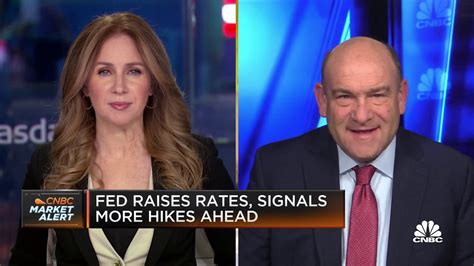
CNBC’s US Interest Rate Guide: What You Need to Know Hey there, financial explorers! Ever wonder what all the fuss is about when
CNBC
talks about
US interest rates
? It can sound a bit like a foreign language sometimes, right? But trust me, guys, understanding these rates isn’t just for economists in fancy suits; it’s genuinely crucial for
everyone
living in the United States. From your mortgage payments to the interest you earn on your savings, and even the price of your groceries,
US interest rates
are like the invisible strings pulling the levers of our entire economy. They dictate the cost of borrowing money and the return on saving it, making them a fundamental driver of economic activity, consumer behavior, and investment decisions across the nation. When the
Federal Reserve
decides to tweak these rates, it sends ripples through literally every corner of the financial world, impacting everything from major corporate expansions to the personal loan you might take out for a new car. That’s why keeping an eye on what’s happening with these vital economic indicators, especially through a reliable source like
CNBC
, is so incredibly important. They do an awesome job of breaking down complex financial jargon into understandable nuggets, giving you the real scoop on what’s moving the markets and affecting your wallet. We’re talking about real-time updates, expert analysis, and in-depth discussions that can help you connect the dots between economic policy and your everyday life. So, buckle up! In this comprehensive guide, we’re going to dive deep into the world of
US interest rates
, explore
why CNBC is an indispensable resource
for understanding them, and empower you with the knowledge to make smarter financial decisions. We’ll demystify the Federal Reserve’s role, explain how rate changes
directly impact your finances
, and give you the inside track on how to best consume
CNBC’s top-notch coverage
to stay ahead of the curve. Get ready to turn that financial jargon into real-world insights, because by the end of this, you’ll be much more confident in understanding the intricate dance of
US interest rates
and their profound effect on our collective economic journey. This isn’t just about numbers; it’s about understanding the pulse of the economy and how you can navigate it wisely. Let’s get started and unravel the mystery together, making
US interest rates
less intimidating and more understandable for
you
! It’s all about making sure you’re clued in to the forces shaping our financial landscape, giving you a better handle on your own economic future and helping you leverage the information
CNBC provides
to your advantage.
Understanding these rates
truly empowers you to be a more informed participant in the economy, rather than just a passive observer.## What Are US Interest Rates, Anyway? Alright, let’s kick things off by getting a handle on what
US interest rates
actually are, in plain English. At its core, an interest rate is simply the
cost of borrowing money
or the
return on saving money
. Think of it like a rental fee for cash. When you borrow from a bank for a mortgage or a car loan, you pay interest on top of the principal. When you deposit money in a savings account, the bank pays
you
interest. In the United States, the most talked-about interest rate, and truly the foundation of all others, is the
federal funds rate
. This isn’t a rate you or I directly pay, but it’s the target rate that commercial banks charge each other for overnight lending to meet reserve requirements. The big player who sets this target is the
Federal Reserve
, our nation’s central bank. They meet regularly (about eight times a year) as the
Federal Open Market Committee (FOMC)
to decide whether to raise, lower, or maintain this rate. Their decisions are absolutely massive because they directly influence all other
interest rates
across the economy. When the Fed raises the federal funds rate, borrowing money generally becomes more expensive for banks, which then passes those higher costs onto us, the consumers and businesses, in the form of higher mortgage rates, car loan rates, and credit card APRs. Conversely, when the Fed lowers the rate, borrowing becomes cheaper, encouraging spending and investment.
This ripple effect is why CNBC spends so much time covering every Fed announcement with bated breath.
They understand that a small tweak to the federal funds rate can have huge implications for the housing market, business investment, consumer spending, and ultimately, the overall health of the
US economy
. Understanding this fundamental mechanism is your first step to becoming financially savvy, allowing you to better interpret the financial news and make informed personal decisions. It’s about knowing
why
your mortgage rate might fluctuate or
why
your savings account is suddenly yielding more (or less) interest. The Federal Reserve uses these
US interest rates
as a key tool of monetary policy to achieve its dual mandate:
maximum employment
and
stable prices
(meaning keeping inflation in check). So, when you hear
CNBC anchors
discussing the Fed’s next move, they’re really talking about how the central bank plans to steer the massive ship that is the American economy, aiming for that sweet spot of growth without runaway inflation. It’s a delicate balancing act, and the
interest rates
are their primary instrument.## Why CNBC is Your Go-To for Rate Insights When it comes to staying on top of
US interest rates
and all things economic,
CNBC
isn’t just a news channel; it’s practically a national institution for financial information. Seriously, guys, if you want the real-time pulse of the market and deep dives into what’s moving the needle on
interest rates
,
CNBC
is where it’s at. What makes them so indispensable? First off, their
real-time reporting
is second to none. The moment the Federal Reserve makes an announcement about
rate changes
, or when a key economic data point is released,
CNBC
is on it. You’ll get immediate analysis, often within seconds, from their roster of seasoned journalists and market experts. They don’t just report the news; they
decode it
for you. Think about it: understanding how a shift in the
federal funds rate
might affect your investment portfolio or the
US economy
isn’t always straightforward.
CNBC
excels at bringing in economists, strategists, and fund managers who can explain the nuances in a way that’s both accessible and insightful. They break down the complex jargon, offering
expert opinions
and diverse perspectives that you won’t find anywhere else. This isn’t just about getting the headlines; it’s about gaining a comprehensive understanding of the forces at play. Their coverage includes detailed discussions on the implications for various sectors – from technology stocks to real estate, and from small businesses to multinational corporations – ensuring you grasp the
broad impact of US interest rates
. Moreover,
CNBC
provides a platform for direct interviews with policymakers, corporate executives, and thought leaders, giving you unfiltered insights straight from the horse’s mouth. Imagine hearing directly from a former Fed official about their thinking process behind previous
rate decisions
, or from a CEO explaining how current
interest rate levels
are influencing their company’s expansion plans. This kind of access is invaluable for anyone trying to piece together the economic puzzle. They’re constantly monitoring global markets, too, understanding that
US interest rates
don’t exist in a vacuum. International events and policies can have a significant spillover effect, and
CNBC
is excellent at illustrating these interconnected relationships. So, whether you’re a seasoned investor, a small business owner, or just someone trying to understand their financial future, tuning into
CNBC
for
US interest rate news
provides a critical edge. They offer the context, the analysis, and the diverse viewpoints needed to truly understand the dynamics of our economic landscape, making them an
unbeatable resource
for market intelligence.## The Federal Reserve’s Role: The Big Boss of Rates Okay, let’s get into the nitty-gritty of the real power player when it comes to
US interest rates
: the
Federal Reserve
. Often called “the Fed,” this independent central bank is absolutely central to the financial health of the United States. Its primary goal, as mandated by Congress, is to maintain
maximum employment
and
stable prices
– a fancy way of saying they want lots of jobs and low, predictable inflation. To achieve this dual mandate, the Fed employs several tools, but none is more impactful or closely watched than its ability to set the target for the
federal funds rate
. The decisions are made by the
Federal Open Market Committee (FOMC)
, which consists of 12 members: the seven governors of the Federal Reserve System, the president of the Federal Reserve Bank of New York, and presidents of four other Federal Reserve Banks on a rotating basis. These folks meet about eight times a year, and their announcements are
major events
on the economic calendar, often driving significant market volatility.
CNBC’s coverage of these FOMC meetings and subsequent press conferences is truly unparalleled
, providing real-time analysis, expert commentary, and immediate reactions from market participants. When the Fed decides to
raise interest rates
, they’re typically trying to cool down an overheating economy and combat inflation. Higher borrowing costs discourage spending and investment, which can slow down price increases. Conversely, when they
lower interest rates
, it’s usually to stimulate a sluggish economy, making it cheaper to borrow, encouraging businesses to expand and consumers to spend. Beyond just the federal funds rate, the Fed also engages in
quantitative easing (QE)
or
quantitative tightening (QT)
. QE involves buying large quantities of government bonds and other securities to inject liquidity into the financial system, effectively lowering long-term interest rates and encouraging investment. QT is the reverse, shrinking their balance sheet to remove liquidity and push rates higher. These are powerful, complex tools, and understanding them is key to grasping the Fed’s broader strategy.
CNBC does an excellent job of simplifying these intricate monetary policy discussions
, often using clear graphics and analogies to explain what quantitative easing means for your 30-year mortgage or how quantitative tightening might affect bond yields. They bring in former Fed officials and top economists to offer
informed predictions
and post-decision analysis, helping you understand not just
what
the Fed did, but
why
and
what it means for the future
of the
US economy
. Keeping an eye on the Fed through
CNBC
is like having a direct line to the economic control center, giving you crucial insights into the direction of
US interest rates
and the broader financial landscape. It’s the ultimate backstage pass to understanding the forces shaping your financial world.## How US Interest Rate Changes Impact Your Wallet (and the Economy) Alright, guys, this is where the rubber meets the road! Understanding
how US interest rate changes directly impact your wallet
and the broader economy is absolutely critical. When the Federal Reserve tweaks that federal funds rate, it’s not just some abstract economic concept; it sends tangible ripples through every financial product and service you interact with. Let’s break it down, and you’ll see
why CNBC dedicates so much airtime to these shifts
. First up,
mortgages
. For most people, a home is their biggest investment, and mortgage rates are directly tied to the Fed’s actions. When
US interest rates rise
, so do mortgage rates, making it more expensive to buy a home or refinance an existing one. This can cool down the housing market, as fewer people can afford the higher monthly payments. Conversely,
lower interest rates
can ignite a housing boom, making homeownership more accessible and encouraging refinancing.
CNBC
consistently features segments with real estate experts explaining these dynamics and showing you real-time mortgage rate trends. Then there are
car loans and personal loans
. These also become more expensive when rates go up, meaning your monthly payments on that new car or personal loan will be higher. This can slow down big-ticket purchases and consumer spending overall. Credit card interest rates, which are typically variable, will also tick up, making it pricier to carry a balance. On the flip side, if you’re a saver,
higher US interest rates
can actually be a good thing! Savings accounts, Certificates of Deposit (CDs), and money market accounts will start offering better returns, allowing your money to work harder for you.
CNBC often highlights the best savings rates
during periods of rising interest rates, helping you find opportunities to boost your passive income. For businesses,
interest rate changes
are equally impactful. Higher rates make it more expensive for companies to borrow money for expansion, hiring, or new equipment, which can slow economic growth. Lower rates encourage investment and can spur job creation. The stock market is also heavily influenced. Companies with high debt loads might struggle in a high-rate environment, while growth stocks can be sensitive to borrowing costs. Furthermore,
US interest rates
play a huge role in the global economy, affecting the value of the dollar and international trade. A stronger dollar (often a result of higher US rates) makes US exports more expensive but imports cheaper.
CNBC’s global coverage connects these dots
, showing you how
US rate decisions
resonate across continents. Understanding these direct impacts, as explained and analyzed by
CNBC’s top financial journalists
, empowers you to make smarter choices about everything from taking out a loan to deciding where to stash your savings. It’s about proactive financial management rather than just reacting to headlines.## Decoding CNBC’s Rate Coverage: Tips for Smart Viewers Now that we’ve covered the what, why, and how of
US interest rates
and
CNBC’s vital role
in reporting on them, let’s talk about how you, the smart viewer, can make the absolute most of their comprehensive coverage. It’s not enough to just tune in; you need to know
what to listen for and who to pay attention to
. First and foremost, when
CNBC
covers the
Federal Reserve’s FOMC meetings
and announcements, pay close attention to the
Fed Chair’s press conference
. This is often the most revealing part, as the Chair will explain the rationale behind the decision and offer clues about future monetary policy.
Listen for keywords
like “data dependent,” “inflation outlook,” “labor market strength,” and “path of interest rates.” These phrases are not just jargon; they are indicators of the Fed’s future intentions.
CNBC’s anchors and commentators
will immediately dissect these remarks, providing invaluable initial reactions and setting the tone for market expectations. Secondly, identify
CNBC’s key economic reporters and analysts
who specialize in monetary policy. People like Steve Liesman (the Fed reporter) or Rick Santelli (the market commentator) often have deep institutional knowledge and unique insights. Their nuanced understanding of
US interest rates
and the Fed’s communication style can help you read between the lines. Don’t just take their word as gospel, but use their perspectives to inform your own thinking.
They are often the first to spot subtle shifts in rhetoric that can signal upcoming rate changes
. Thirdly, keep an eye on the
economic indicators
that
CNBC
constantly references. These are the data points that the Fed itself watches closely when making
interest rate decisions
. We’re talking about the Consumer Price Index (CPI) for inflation, the jobs report (non-farm payrolls, unemployment rate), GDP growth figures, and consumer confidence surveys.
CNBC’s market update segments
will always highlight these releases and their market impact. Understanding these indicators will give you a better grasp of
why the Fed might be considering a rate hike or cut
. Fourthly, look beyond just the headlines about the federal funds rate.
CNBC
also covers movements in the
bond market
, particularly the yield on the 10-year Treasury note, which often serves as a benchmark for mortgage rates and other long-term borrowing costs. Pay attention to discussions about the “yield curve” and what its shape might be signaling about future economic growth or recession risks. Finally, don’t shy away from
CNBC’s expert panels and interviews
. They often bring together a diverse group of economists, fund managers, and strategists who will debate the
potential implications of US interest rate policies
from various angles. Listening to these differing viewpoints can broaden your understanding and help you form a more balanced perspective. By actively engaging with
CNBC’s content
in this strategic way, you’ll transform from a passive observer into an informed participant, equipped to understand and react to the ever-changing landscape of
US interest rates
and their profound effect on our economy.## Your Guide to Navigating the Rate Landscape with CNBC So, there you have it, folks! We’ve journeyed through the intricate world of
US interest rates
, from understanding their fundamental definition and the colossal role of the
Federal Reserve
to exploring their tangible impact on your everyday finances. It’s become abundantly clear that these rates are far more than just abstract numbers; they are the very heartbeat of our
US economy
, influencing everything from your mortgage payments and credit card interest to the broader landscape of investments and job creation. Keeping a finger on the pulse of these economic drivers is not just for Wall Street gurus; it’s a vital skill for every financially aware individual. And when it comes to staying informed,
CNBC
truly stands out as an
unrivaled resource
. Their commitment to
real-time coverage
,
in-depth analysis
, and
expert commentary
makes them an indispensable partner in navigating the often-complex world of monetary policy. They empower you to move beyond the headlines, offering the context and nuance necessary to understand
why rates are moving
and
what those movements mean for you
. By actively engaging with
CNBC’s comprehensive reporting
—paying close attention to Fed announcements, understanding key economic indicators, and following their top-tier analysts—you gain a significant advantage. You transform from a passive recipient of financial news into an empowered individual, capable of making informed decisions about your personal finances and investments. Whether you’re planning to buy a home, save for retirement, or simply want to better understand the forces shaping your economic future,
staying abreast of US interest rate developments
through a trusted source like
CNBC
is absolutely essential. So, next time you hear about the Fed, remember that
CNBC
is there to help you unravel the mystery, making the powerful world of
US interest rates
understandable and actionable. Keep learning, keep watching, and keep asking questions. Your financial future will thank you!
